Blepharoplasty
Blepharoplasty is a procedure that aims to enhance the appearance of the eyelids. Over time, excess skin (dermatochalasis) develops in both the upper and lower eyelids, giving the patient a tired look. In some cases, the skin sagging can be significant enough to cover part of the visual field and therefore affect vision.
Blepharoplasty is a procedure that aims to enhance the appearance of the eyelids. Over time, excess skin (dermatochalasis) develops in both the upper and lower eyelids, giving the patient a tired look. In some cases, the skin sagging can be significant enough to cover part of the visual field and therefore affect vision.
Blepharoplasty can be performed on both the upper and lower eyelids.
Blepharoplasty
Upper eyelid
The goal of upper eyelid blepharoplasty is to remove excess skin and/or fat and give the patient a more rested and youthful look.
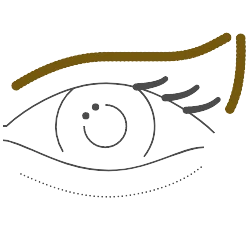
Blepharoplasty
Lower eyelid
Lower eyelid blepharoplasty is a procedure that removes excess fat and/or skin from the lower eyelid, which often gives the patient a tired appearance. In many cases, fat is also redistributed to achieve the desired result.

Upper eyelid blepharoplasty can be performed under either local or general anesthesia. After the surgeon measures the amount of excess skin that can be safely removed, a thin incision is made within the natural skin crease. The excess skin and/or fat is then removed, and the incision is closed with very fine absorbable sutures.
In lower eyelid blepharoplasty, if excess skin is present, an incision is made just below the eyelashes, parallel to the eyelid margin. This technique achieves a natural result with virtually no visible scarring. In cases where there is no excess skin—only "bags" or fat displacement—the surgery can be performed from the inner side of the eyelid (transconjunctival approach), leaving no external scar.
Lower blepharoplasty is typically performed under general anesthesia or deep sedation to ensure patient comfort.
In non-surgical blepharoplasty, small thermal burns are made to the excess skin of the upper eyelid, with the aim of shrinking and reducing its volume. However, unlike traditional blepharoplasty, it can only reduce very small excess skin in the upper eyelid, it cannot correct festoons in the lower eyelids, it is impossible to reduce the fat that often coexists, and the results are often not permanent.
| Traditional Blepharoplasty | Non-surgical blepharoplasty | |
|---|---|---|
| Excess skin that can be corrected | ++++ | + |
| Effectiveness in reducing skin on the upper eyelid | ++++ | + |
| Effectiveness in reducing skin on the lower eyelid | ++++ | - |
| Effectiveness in fat reduction | ++++ | - |
| Long-term results | ++++ | + |
For more information about blepharoplasty, Oculoplastic surgeon Dr. Ioannis Chalkias is available to assist you.